

Grade 3 acne represents a significant escalation in both inflammation and potential skin damage.
At this stage, acne is no longer limited to occasional blemishes or mild congestion. The skin often contains numerous inflamed papules and pustules, with breakouts occurring in clusters that can spread across larger areas of the face, chest, back, or shoulders. Redness becomes more pronounced, swelling is often present, and lesions may begin merging together into larger areas of inflammation.
One of the biggest concerns with Grade 3 acne is the increased risk of scarring.

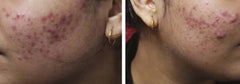


Unlike mild acne, where skin often heals without lasting consequences, severe inflammatory acne can damage surrounding tissue even when lesions are left alone. In other words, scarring is not always the result of picking or squeezing. The inflammatory process itself can contribute to long-term changes in the skin's structure.
This is why early intervention becomes especially important.
Many people with Grade 3 acne find themselves trapped in a cycle of increasingly aggressive treatments. They try stronger cleansers, stronger acids, more exfoliation, more spot treatments, and more products, hoping to force the skin into clearing.
Unfortunately, severe acne is often accompanied by significant barrier dysfunction and inflammation. When the skin is repeatedly stripped and irritated, healing becomes more difficult and inflammation can become even more persistent.
At this stage, acne should be viewed as more than just clogged pores. It is a condition involving chronic inflammation, abnormal cell turnover, excess oil production, microbial imbalance, and often hormonal influences occurring simultaneously.
Because of this complexity, professional guidance can be incredibly valuable. A licensed esthetician who specializes in acne or a dermatologist can help determine whether the acne is truly Grade 3 or if it is progressing toward cystic acne that may require a more aggressive medical approach.
For many people, success comes from focusing on consistency rather than intensity. Gentle cleansing, appropriate exfoliation, hydration, barrier support, skin-compatible oil balance, and protection from ultraviolet damage remain essential. While active ingredients like prescription azelaic acid can certainly play a role, they should support the skin rather than continuously challenge it.
Patience is also critical.
Severe acne rarely improves overnight. The inflammatory lesions visible today often began forming weeks earlier. Meaningful improvement requires time, consistency, and a treatment plan that addresses the skin as a whole rather than simply targeting individual blemishes.
Lifestyle factors also become increasingly important at this stage. While acne is not caused by poor diet alone, factors such as chronic stress, inadequate sleep, blood sugar fluctuations, food sensitivities, smoking, and overall inflammatory load may influence acne severity in some individuals. Supporting your health through quality sleep, stress management, hydration, regular movement, and a nutrient-dense diet can help create an environment that is more favorable for skin healing and recovery.
Because Grade 3 acne involves more significant inflammation, internal support may also be worth considering. Omega-3 fatty acids, especially Peak EPA, are often discussed for their role in supporting a healthy inflammatory response. They are not a replacement for a consistent skincare routine or professional guidance, but for some people dealing with more inflamed acne, a high-quality, Peak-EPA omega-3 1000 mg supplement may be a helpful part of a broader skin-support plan.
This is where the ETHYST® Trinity System can become especially valuable. When inflammation is high, many people instinctively reach for more products, more treatments, and more complexity. Trinity is built on a different philosophy. Clarity Cleanse gently cleanses without stripping the skin's protective barrier. Daily Ritual Moisturizer helps support hydration and barrier resilience, both of which are critical when inflammation is present. Holy Grail Facial Oil provides lightweight nourishment that helps support the skin's natural recovery processes without overwhelming it.
While Trinity is not intended to replace professional medical care when needed, it can provide a stable foundation that supports the skin while reducing many of the unnecessary irritants that often make severe acne harder to manage.
In the next article, we'll discuss Grade 4 acne, also known as cystic acne, the most severe form of acne and the type most likely to result in significant discomfort and long-term scarring.


